
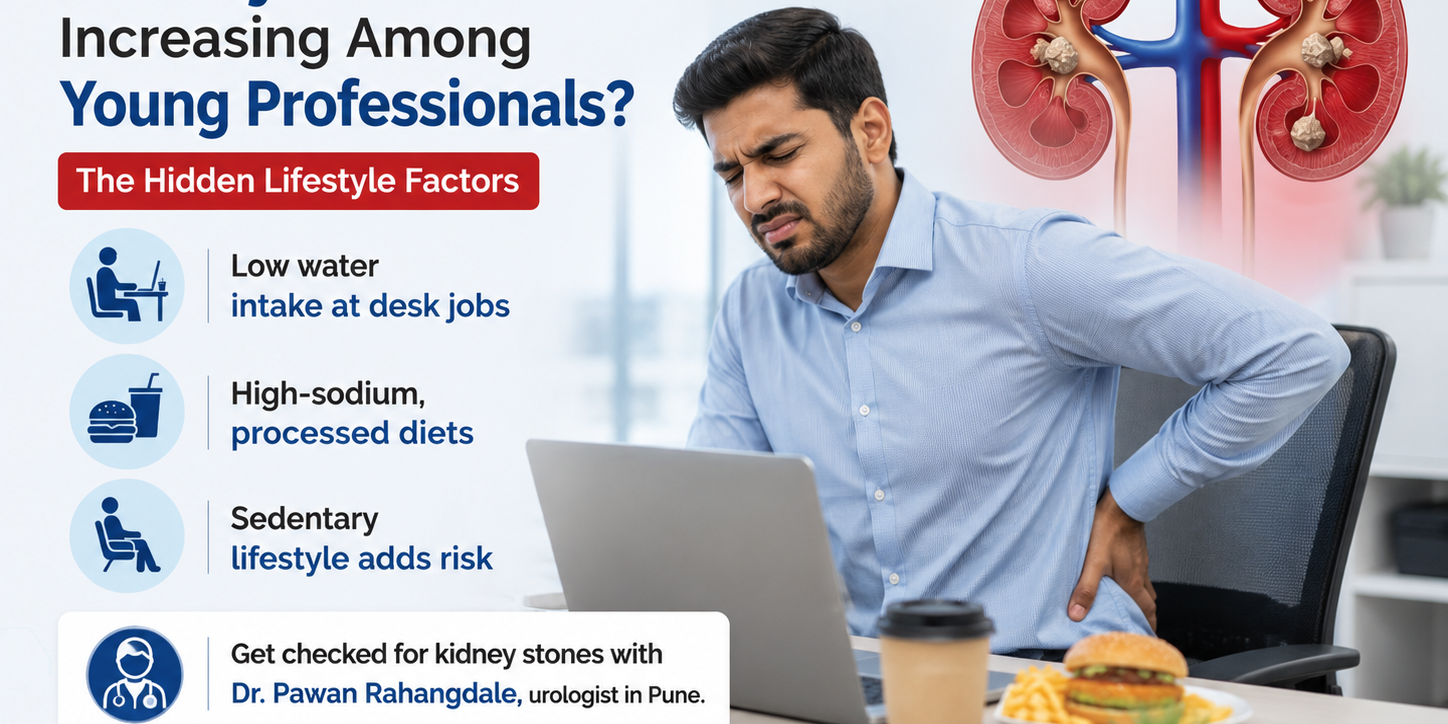
A decade ago, kidney stones were considered a problem for people in their 40s and 50s. Walk into any urology clinic today, though, and you’ll find a very different picture. Techies, consultants, marketing executives, and other desk-bound professionals in their 20s and 30s are showing up with the same sharp, doubling-over pain that used to be reserved for much older patients.
This isn’t just anecdotal. Research shows kidney stone disease affects roughly 12% of India’s population, with certain regions, including Maharashtra, falling within what doctors call the country’s “stone belt” due to climate and dietary patterns (NCBI, Dietary Determinants of Renal Calculi). What’s changed is who’s getting them. Doctors across India are increasingly seeing young patients with kidney stones, a shift many experts link directly to modern lifestyle habits rather than genetics alone (Medindia).
So what exactly is driving this trend, and why should young professionals in cities like Pune be paying attention to it now?
The Desk Job Trap: How Office Life Fuels Stone Formation
Most young professionals don’t think twice about a long meeting, a skipped water break, or an afternoon powered entirely by coffee. But these small daily habits add up in ways that directly affect kidney health.
- Chronic dehydration: Back-to-back calls and deadlines mean water bottles often stay untouched for hours. When fluid intake drops, urine becomes concentrated, making it easier for minerals like calcium, oxalate, and uric acid to crystallise and eventually form stones.
- Air-conditioned offices: Sitting in cool, dry environments for eight to ten hours a day increases insensible fluid loss without the obvious sweating that would normally prompt someone to drink more water.
- Prolonged sitting: Long hours at a desk slow circulation and reduce the natural flushing action that helps prevent mineral buildup in the urinary tract.
- Excess caffeine, minimal water: Many professionals replace plain water with tea or coffee throughout the day, which doesn’t hydrate the body the same way and can worsen concentration of urine.
Urologists across the country have pointed out that these office-driven habits are quietly reshaping the age profile of kidney stone patients, with more people in their 20s and 30s being diagnosed than ever before.
Diet, Stress, and the Modern Lifestyle Equation
Beyond hydration, what young professionals eat and how they cope with pressure at work plays a bigger role than most people realise.
Salty snacks, packaged food, and frequent ordering in have become staples of the modern workday. High sodium intake forces the kidneys to excrete more calcium into the urine, and calcium-based stones make up the majority of all kidney stone cases. A case-control study from a tertiary hospital in Rajasthan found that diets high in oxalates, animal protein, salt, and low in fibre were significantly associated with stone formation (NCBI, Rajasthan study).
Work stress adds another layer. A hospital-based study on Indian adults found that stressed patients had nearly three times higher odds of developing kidney stones compared to those who weren’t stressed (NCBI, Risk Factors of Incident Kidney Stones). Chronic stress is known to alter hormone levels and hydration habits, both of which can tip the balance toward stone formation over time.
A few other contributing factors worth knowing:
- Skipping meals and irregular eating patterns, common among people juggling tight schedules, can disrupt the body’s mineral balance.
- Low physical activity, often a byproduct of long commutes and desk work, is linked to slower metabolism of calcium and other minerals.
- Heat exposure and travel, especially for professionals who work outdoors or travel frequently for client visits, can raise the risk further. Some studies note that people between 20 and 40 years old see up to a 40% higher chance of developing kidney stones during hotter months due to fluid loss.
Recognising the Warning Signs Early
Kidney stones don’t always announce themselves loudly at first. Many young professionals dismiss early symptoms as regular back pain from sitting too long, which delays diagnosis. Watch out for:
- Sharp or cramping pain in the back, side, or lower abdomen that comes in waves
- Burning sensation or discomfort while urinating
- Blood in urine, or urine that looks unusually cloudy or dark
- Nausea, vomiting, or a persistent urge to urinate
If any of these symptoms show up, it’s worth getting evaluated rather than waiting it out. Left untreated, stones can grow larger, block the urinary tract, or lead to infections that are far more complicated to manage.
Small Changes That Make a Real Difference
The encouraging part is that most of these risk factors are entirely within a person’s control. Drinking two to three litres of water daily, cutting back on processed and salty foods, taking short movement breaks during work hours, and managing stress through exercise or better sleep can meaningfully lower the risk. Regular health check-ups also help catch small stones before they become painful emergencies.
Read More –
- Kidney Stones
- Kidney Stones Symptoms in Men and Women
- Break Free from Kidney Stones with Advanced Urology Care
How Urovision Urology Care Clinic Can Help
If you’re a young professional in Pune experiencing recurring back pain, discomfort while urinating, or have simply been putting off a check-up because of a hectic schedule, it’s worth taking that first step. At Urovision Urology Care Clinic, patients get access to accurate diagnosis and modern, minimally invasive kidney stone treatment tailored to their lifestyle and stone type, from dietary guidance and medication for smaller stones to advanced procedures like lithotripsy and laser stone removal for larger or recurrent cases.
Led by Dr. Pawan Rahangdale, the clinic focuses on giving working professionals practical, time-efficient care, because good kidney stone treatment in Pune shouldn’t mean weeks away from your job. Whether it’s your first stone or a recurring issue, the team works with you to find both immediate relief and long-term prevention strategies suited to a busy professional life.
If work stress and long hours have been quietly taking a toll on your kidney health, don’t wait for the pain to force the conversation. A simple consultation today could save you a much harder one later.
Frequently Asked Questions
- Why are kidney stones becoming more common in young professionals?
Kidney stones in young professionals are largely linked to lifestyle factors such as low water intake during long work hours, excessive salt and processed food consumption, prolonged sitting, and high stress levels. These habits concentrate minerals in the urine, making it easier for stones to form even in otherwise healthy young adults. - Can kidney stones be treated without surgery?
Yes, many smaller kidney stones can pass naturally with increased water intake and pain-relief medication prescribed by a urologist. For stones that don’t pass on their own, non-surgical options like lithotripsy can break the stone into smaller fragments. Larger or recurrent stones may need minimally invasive procedures, which is why timely kidney stone treatment in Pune from an experienced urologist is important. - How can I prevent kidney stones as a busy working professional?
Drinking at least 2 to 3 litres of water daily, reducing salty and processed snacks, taking short breaks to move during long work hours, and managing stress can significantly lower your risk. If you have a family history of kidney stones or have had one before, regular check-ups are recommended to catch new stones early.
#KidneyStones #UrologyCare #HealthyLifestyle #YoungProfessionals #KidneyHealth #PuneHealthcare #UrovisionUrologyCareClinic #DrPawanRahangdale #WorkplaceWellness #PreventiveHealthcare