
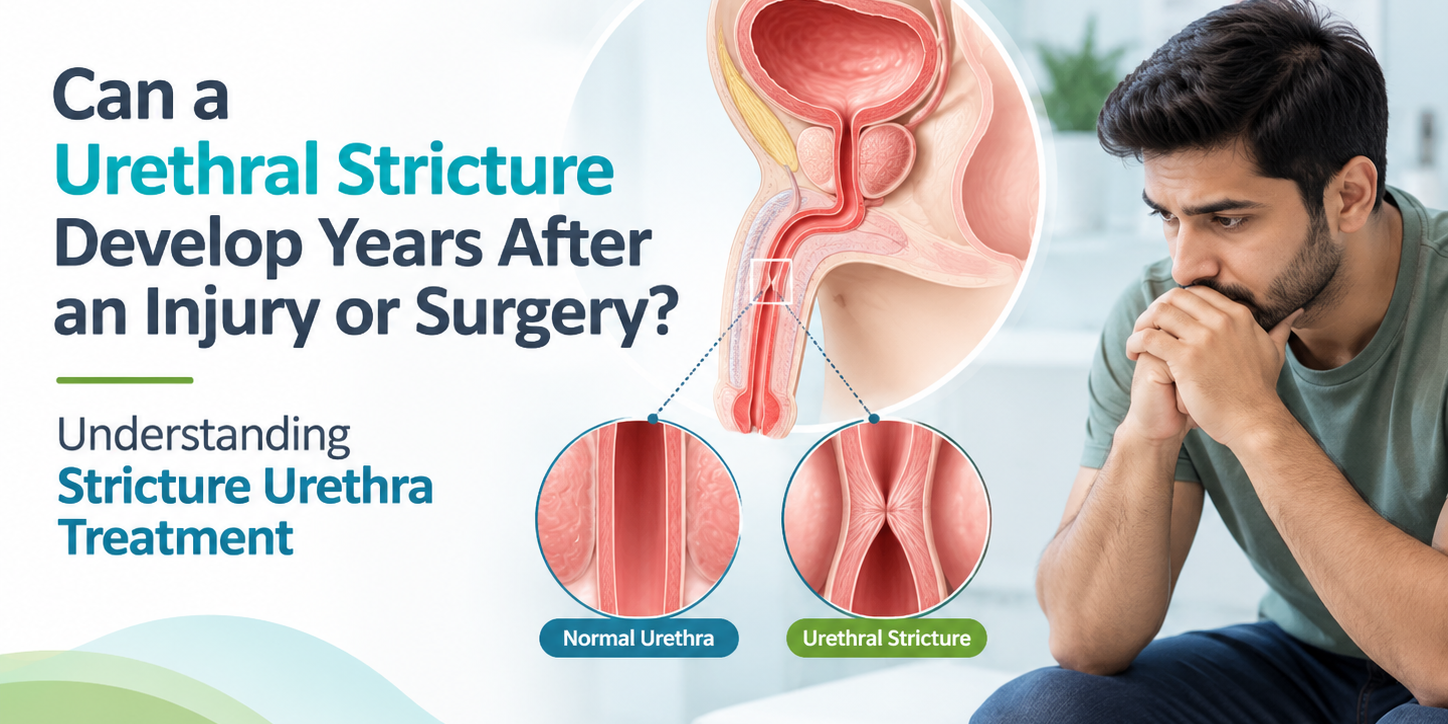
Understanding Stricture Urethra Treatment
A weak urine stream appearing years after an accident or surgery may seem unrelated to the earlier event. However, scar tissue inside the urethra can develop gradually and may not cause obvious symptoms immediately.
This narrowing is known as a urethral stricture. It can restrict urine flow, make bladder emptying difficult and increase the risk of urinary retention or infection.
Anyone with worsening urinary flow and a history of pelvic injury, catheterisation, urethral instrumentation, prostate treatment or pelvic radiation should mention that history during a urological consultation. It may be directly relevant when planning Stricture Urethra treatment.
What Is a Urethral Stricture?
The urethra is the tube that carries urine from the bladder out of the body. When its lining is injured or inflamed, healing may produce scar tissue. Unlike healthy urethral tissue, scar tissue does not stretch normally.
As the scar contracts, the urethral channel becomes narrower. Urine must then pass through a smaller opening, which can reduce the force of the stream and increase pressure on the bladder.
Urethral strictures are more common in men because the male urethra is longer, but narrowing can also occur in women.
Why Can Symptoms Appear Years Later?
Scar tissue does not always cause severe narrowing immediately. It may form and contract gradually. A person may compensate by pushing harder to urinate or waiting longer for the bladder to empty.
Symptoms often become noticeable only after the narrowing reaches a point where urine flow is significantly restricted. Recurrent inflammation, infection or further instrumentation may contribute to worsening.
Radiation-related tissue changes can also appear after a delay. The European Association of Urology notes that radiation-induced strictures can be challenging because radiation may damage both the narrowed segment and nearby tissue, affecting healing.
Which Injuries and Procedures Can Cause a Stricture?
A urethral stricture may develop after:
- Pelvic fracture or road traffic injury: Damage to the posterior urethra can occur with a severe pelvic injury. The EAU’s urological trauma guideline identifies urethral stricture as a possible delayed complication of posterior urethral injury.
- Catheterisation or urethral instrumentation: Difficult catheter insertion, repeated catheterisation or procedures performed through the urethra can injure the lining.
- Prostate or urinary surgery: Some procedures for prostate enlargement, prostate cancer or bladder conditions can be followed by urethral narrowing or bladder-neck stenosis.
- Pelvic radiation: Radiation used to treat prostate or other pelvic cancers may cause progressive tissue scarring.
- Previous stricture procedures: A stricture can recur after dilation, internal urethrotomy or reconstructive surgery.
- Inflammation or infection: Certain infections and inflammatory skin conditions, including lichen sclerosus, may cause or contribute to scarring.
Having one of these risk factors does not mean a stricture will definitely develop. It does mean that new urinary symptoms should be evaluated rather than assumed to be age-related or caused only by the prostate.
Symptoms That May Suggest Urethral Narrowing
Symptoms can develop slowly and may initially be easy to ignore. They can include:
- A weak, thin, spraying or interrupted urine stream
- Straining or taking longer to urinate
- A feeling that the bladder has not emptied
- Dribbling after urination
- Frequent or urgent urination
- Pain or burning while passing urine
- Recurrent urinary infections
- Blood in the urine or semen
- Sudden inability to pass urine
These symptoms can also occur with prostate enlargement, infection or bladder dysfunction. A urologist must determine the actual cause.
What Problems Can an Untreated Stricture Cause?
As resistance increases, the bladder must work harder to push urine through the narrowed urethra. Over time, bladder function may deteriorate.
Urine remaining in the bladder can encourage infection and may contribute to stone formation. Severe obstruction can cause complete urinary retention and, in some cases, affect the upper urinary tract or kidney function.
The NIDDK advises that sudden inability to urinate requires emergency medical treatment.
How Is a Urethral Stricture Diagnosed?
Evaluation begins with the patient’s urinary symptoms and complete medical history. Details about old injuries, catheterisation, urinary surgery, radiation and previous stricture treatment are important even when they occurred years earlier.
Tests may include:
- Urine flow test: Uroflowmetry measures the speed and pattern of urination.
- Post-void residual measurement: Ultrasound checks how much urine remains in the bladder after urination.
- Retrograde urethrogram: Contrast imaging shows the location and approximate length of the narrowing.
- Cystoscopy: A small camera may be used to inspect the urethra and bladder.
- Urine and blood tests: These may identify infection and assess kidney function when necessary.
According to the American Urological Association urethral stricture guideline, imaging or endoscopic assessment is used to confirm the diagnosis and guide treatment planning.
What Treatments Are Available?
Treatment depends on the stricture’s location, length, cause, severity and previous procedures.
Urethral Dilation
Dilation gradually stretches the narrowed area. It may be considered for selected short strictures, but recurrence can occur because stretching does not remove the scar-producing process.
Direct Vision Internal Urethrotomy
During internal urethrotomy, the scar is cut endoscopically to widen the channel. It may be appropriate for certain short, previously untreated strictures. It may be less effective for long, dense or recurrent narrowing.
Urethroplasty
Urethroplasty is reconstructive surgery that removes or widens the scarred section. Some repairs reconnect healthy ends of the urethra, while others use tissue grafts to enlarge the narrowed segment.
The choice should not be based only on convenience. Repeated endoscopic procedures may not provide durable relief for some recurrent strictures. A detailed evaluation helps determine whether another endoscopic treatment or reconstruction is more appropriate.
When Should You Seek Urgent Care?
Seek immediate medical attention if you cannot pass urine despite having a painful or full bladder. Fever, chills, severe urinary pain, weakness or confusion may indicate infection and also require prompt care.
Do not attempt self-catheterisation unless you have been specifically trained and instructed by a clinician.
Consult Dr. Pawan Rahangdale at Urovision Urology Care Clinic
At Urovision Urology Care Clinic, Dr. Pawan Rahangdale evaluates urethral narrowing based on its cause, location, length and previous treatment history.
For Stricture Urethra treatment in Pune, patients can consult Dr. Pawan Rahangdale for an individual assessment and discussion of suitable treatment options. Mentioning previous injuries, catheterisation, surgery or radiation can help connect current symptoms with an older event.
This article provides general health information and is not a substitute for diagnosis or personalised treatment advice.
Frequently Asked Questions
1. How long after an injury can a urethral stricture appear?
Symptoms may develop within weeks or months, but some strictures become noticeable years later. The timing depends on the injury, location of scarring and how quickly the narrowing progresses.
2. Can a urethral stricture return after dilation or surgery?
Yes. Recurrence can occur after dilation, internal urethrotomy or urethroplasty, although the likelihood varies by stricture type and treatment. A weakening stream after previous treatment should be reassessed by a urologist.
3. Can medicine cure a urethral stricture?
Medicines do not remove established urethral scar tissue. Antibiotics may treat an associated infection, but the narrowing itself often requires an endoscopic or reconstructive procedure. The appropriate approach depends on the stricture’s length, location and previous treatment.
#urethralstricture #strictureurethra #strictureurethratreatmentinpune #urologistinpune #urinaryretention #urethroplasty #urinaryhealth #menshealth #punehealthcare