
When to Seek Kidney Stone Treatment in Pune
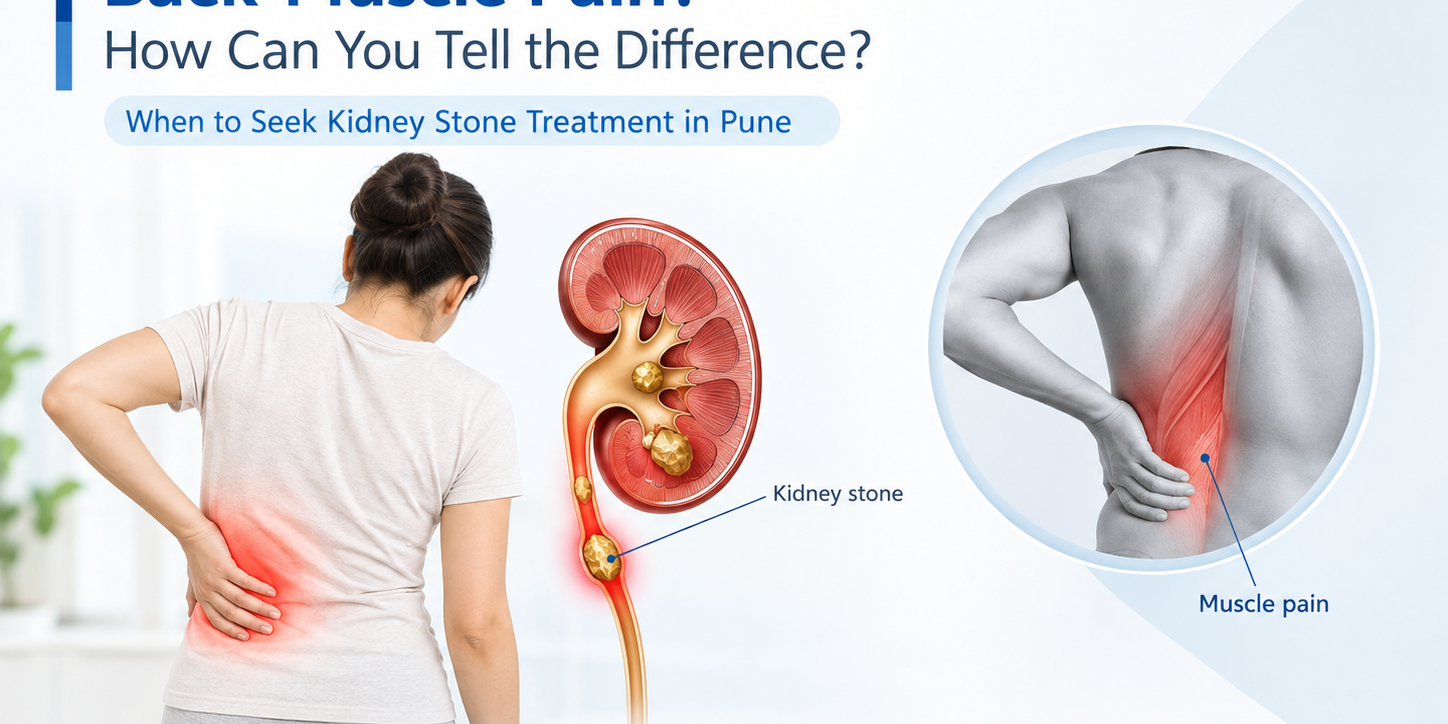
Pain in the back or side is common, but it is not always easy to identify its source. Kidney stone pain may initially feel like a back spasm, while muscular pain can sometimes become severe enough to resemble a urinary problem.
The location, pattern and accompanying symptoms provide useful clues. However, symptoms alone cannot confirm the diagnosis. Urine tests and imaging may be needed, particularly when pain is severe or unfamiliar.
Where Is Kidney Stone Pain Usually Felt?
Kidney stone pain commonly begins in the flank, which is the side of the back below the ribs. When a stone moves from the kidney into the ureter, pain may travel towards the lower abdomen or groin.
The National Institute of Diabetes and Digestive and Kidney Diseases lists sharp pain in the back, side, lower abdomen or groin among typical stone symptoms.
The location may change as the stone moves. A lower ureteric stone may also cause urinary urgency, frequency or discomfort during urination.
How Does Kidney Stone Pain Behave?
Typical features include:
- Sudden onset of intense flank pain
- Pain that comes and goes in waves
- Difficulty remaining still or finding a comfortable position
- Pain radiating towards the abdomen or groin
- Nausea or vomiting
- Pink, red or brown urine
- Urinary urgency or burning
Not every patient has all these symptoms. Small stones may cause mild discomfort, while a larger stone that remains inside the kidney may be detected without pain.
How Is Back-Muscle Pain Different?
Muscular pain commonly follows lifting, exercise, prolonged sitting, awkward posture or an unfamiliar activity.
Features that suggest a musculoskeletal source include:
- Pain that changes with bending, twisting or a particular movement
- Tenderness when the affected muscle is pressed
- Stiffness or muscle spasm
- Improvement with rest or a change in posture
- Pain remaining in one area instead of moving towards the groin
- Absence of urinary symptoms, nausea and visible blood in urine
These distinctions are not absolute. Kidney pain can worsen with movement, and muscular pain may radiate. Clinical evaluation is important when the pattern is unclear.
What Other Conditions Can Cause Similar Pain?
A kidney infection may cause flank pain with fever, chills, painful urination or feeling unwell. Gallbladder, pancreatic, bowel, spinal and nerve conditions may also cause pain around the back or abdomen.
In women, ovarian and other pelvic conditions can occasionally resemble stone pain. In men, prostate or testicular conditions may produce discomfort involving the groin.
Severe pain should not automatically be treated as a muscle strain without considering these alternatives.
Which Tests Confirm a Kidney Stone?
A urologist may recommend:
- Urinalysis: Checks for blood, infection and urinary crystals. A normal urine test does not completely exclude a stone.
- Blood tests: Assess kidney function and signs of infection.
- Ultrasound: Can identify kidney swelling and many kidney stones without radiation.
- Non-contrast CT scan: Provides detailed information about stone size, location and obstruction.
The imaging choice depends on symptoms, age, pregnancy status, previous scans and the need to limit radiation.
When Does a Kidney Stone Require Urgent Care?
Seek urgent assessment when pain is accompanied by:
- Fever or chills
- Persistent vomiting or dehydration
- Inability to pass urine
- Severe pain despite medication
- Marked weakness, confusion or fainting
- Known single functioning kidney
- Pregnancy
- Significant kidney disease
A stone blocking an infected kidney is a medical emergency. It may require urgent drainage in addition to antibiotics.
What Should You Do While Waiting for Evaluation?
Avoid taking excessive pain medicine or leftover antibiotics. Some anti-inflammatory medicines may be unsuitable for people with kidney disease, ulcers, bleeding risk or certain other conditions.
Drink normal amounts of fluid unless vomiting or a clinician has advised otherwise. Forcing several litres of water rapidly does not push an obstructing stone out and may increase discomfort.
If possible, filter the urine to catch a passed stone for laboratory analysis. Knowing the stone composition can help guide prevention.
How Is Kidney Stone Pain Treated?
Small stones may pass with pain control, hydration guidance and medical expulsive therapy when appropriate. The likelihood of passage depends mainly on stone size and location.
A stone may require intervention when it is unlikely to pass, causes persistent obstruction, produces uncontrolled symptoms or is associated with infection.
Treatment options include shock wave lithotripsy, ureteroscopy with laser fragmentation and percutaneous nephrolithotomy. The recommended approach depends on stone characteristics and the patient’s health.
Preventing Another Stone
After the acute problem is managed, prevention may involve stone analysis, blood tests and a 24-hour urine test for recurrent or high-risk stone formers.
Advice should be individualized. Excessively restricting dietary calcium, for example, may not prevent calcium oxalate stones and can sometimes be counterproductive. Hydration, sodium, animal protein, oxalate and citrate recommendations depend on the patient’s stone type and urinary findings.
Kidney Stone Treatment in Pune at Urovision Urology Care Clinic
Dr. Pawan Rahangdale evaluates suspected kidney stones using symptom assessment, urine tests and appropriate imaging. Patients seeking kidney stone treatment in Pune at Urovision Urology Care Clinic can receive guidance on stone passage, pain control, surgical options and recurrence prevention.
Prompt evaluation is especially important when back pain is accompanied by fever, urinary difficulty, vomiting or visible blood in urine.
Frequently Asked Questions
1. Can kidney stone pain worsen when I move?
It can, but pain that is consistently triggered by a specific movement is more suggestive of a muscular cause. Urinary symptoms, migrating pain and nausea increase suspicion of a stone.
2. Can kidney stones cause back pain without blood in urine?
Yes. Visible blood is not present in every case, and microscopic blood may only be detected through testing. A normal urine test also does not completely rule out a stone.
3. Is ultrasound enough to diagnose every kidney stone?
Ultrasound identifies many stones and signs of obstruction, but it may miss small ureteric stones. A CT scan may be recommended when ultrasound is inconclusive or detailed information is required.