
Diabetes is one of the most common chronic health conditions today, but its impact goes far beyond blood sugar levels. When not properly managed, diabetes can silently damage vital organs—especially the kidneys. This gradual damage often goes unnoticed until it reaches an advanced stage, making awareness and early intervention extremely important.
According to Dr. Pawan Rahangdale, a highly experienced urologist in Pune at UROVISION Clinic, understanding how diabetes affects kidney function can help patients take timely steps to prevent serious complications.
The Role of Kidneys and Why They Are Vulnerable
The kidneys are responsible for filtering waste products, excess fluids, and toxins from the blood. They also help regulate blood pressure, maintain electrolyte balance, and support overall metabolic functions. Each kidney contains millions of tiny filtering units called nephrons.
In individuals with diabetes, consistently high blood sugar levels put excessive pressure on these delicate filtering units. Over time, this leads to structural damage, reducing the kidneys’ ability to function efficiently—a condition known as diabetic nephropathy.
How Diabetes Gradually Damages the Kidneys
Kidney damage due to diabetes does not happen overnight. It is a slow and progressive process that develops over years of uncontrolled or poorly managed blood sugar levels.
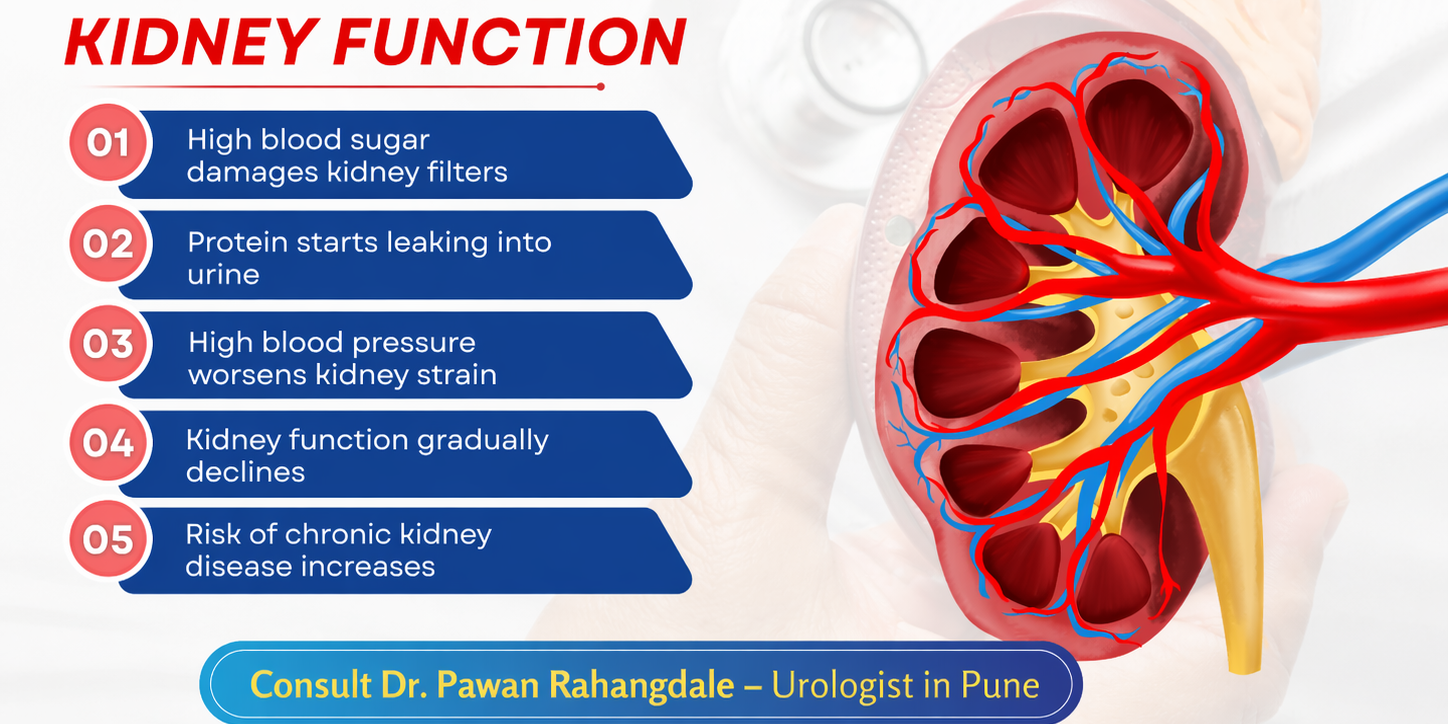
- Damage to Kidney Filters: High glucose levels in the blood cause the filters (glomeruli) to become thick and scarred, reducing their efficiency.
- Protein Leakage (Proteinuria): As the filters weaken, essential proteins like albumin begin to leak into the urine, which is one of the earliest signs of kidney damage.
- Increased Blood Pressure: Diabetes often leads to hypertension, which further strains the kidneys and accelerates damage.
- Declining Kidney Function: Gradually, the kidneys lose their ability to remove waste effectively, leading to toxin buildup in the body.
- Risk of Chronic Kidney Disease (CKD): If not treated in time, this condition can progress to chronic kidney disease and even kidney failure.
Dr. Pawan Rahangdale, known for providing advanced kidney stone treatment in Pune, highlights that many patients ignore early warning signs, which delays diagnosis and treatment.
Early Symptoms Are Subtle but Important
One of the biggest challenges with diabetic kidney disease is that symptoms often appear very late. In the early stages, patients may feel completely normal. However, as the condition progresses, certain symptoms may begin to show:
- Swelling in feet, ankles, or hands due to fluid retention
- Increased or decreased frequency of urination
- Persistent fatigue or weakness
- Difficulty concentrating
- High blood pressure that is difficult to control
Recognizing these signs early and consulting a specialist like Dr. Pawan Rahangdale, a trusted urologist in Pune, can make a significant difference in outcomes.
Importance of Early Diagnosis and Regular Screening
For individuals with diabetes, regular health check-ups are not optional—they are essential. Early detection of kidney damage can help slow or even stop disease progression.
Routine tests may include urine tests to detect protein leakage, blood tests to assess kidney function, and monitoring of blood pressure and blood sugar levels. At UROVISION Clinic, patients receive comprehensive evaluations and personalized care plans tailored to their condition.
Preventing Kidney Damage in Diabetes
The good news is that kidney damage caused by diabetes can often be prevented or delayed with proper care and lifestyle management.
- Maintain controlled blood sugar levels through diet, exercise, and prescribed medication
- Keep blood pressure within a healthy range
- Follow a balanced, kidney-friendly diet with limited salt and processed foods
- Stay adequately hydrated
- Avoid smoking and excessive alcohol consumption
- Take medications only under medical supervision
Dr. Pawan Rahangdale emphasizes that prevention is always more effective than treatment, especially when it comes to chronic conditions affecting the kidneys.
Advanced Care and Treatment Options
If kidney damage has already begun, timely medical intervention can help manage the condition and prevent further complications. Treatment focuses on controlling underlying causes, slowing disease progression, and improving quality of life.
At UROVISION Clinic, patients have access to advanced diagnostic tools and treatment options, including expert care for kidney stone treatment in Pune. Dr. Pawan Rahangdale ensures a patient-centric approach, combining medical expertise with compassionate care.
When Should You See a Specialist?
If you have diabetes, you should not wait for symptoms to appear. Regular consultation with a specialist is crucial. However, immediate medical attention is necessary if you experience persistent swelling, changes in urination, or uncontrolled blood sugar and blood pressure levels.
Choosing an experienced urologist in Pune like Dr. Pawan Rahangdale ensures accurate diagnosis and effective management of kidney-related concerns.
Conclusion
Diabetes can silently affect kidney function over time, often without noticeable symptoms in the early stages. Understanding the connection between diabetes and kidney health is the first step toward prevention.
With proper lifestyle management, regular screening, and expert medical guidance, it is possible to protect your kidneys and maintain overall well-being. For specialized care and trusted expertise, Dr. Pawan Rahangdale at UROVISION Clinic stands out as a reliable choice for patients seeking comprehensive kidney care and kidney stone treatment in Pune.