
Recovery Advice From a Prostate Cancer Specialist in Pune
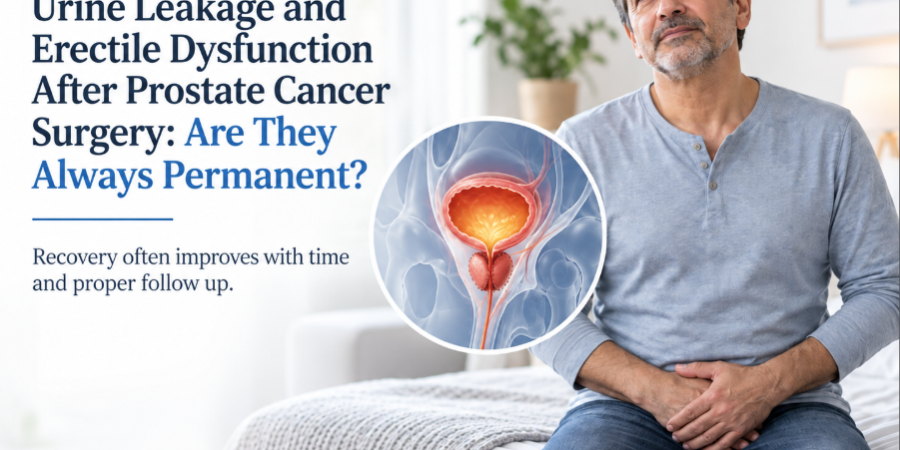
Urinary leakage and difficulty achieving an erection are two concerns that commonly worry patients before radical prostatectomy. Both can occur because the prostate is located close to the urinary sphincter, pelvic floor muscles and nerves involved in erections.
These problems are not always permanent. Many men improve gradually, but recovery varies widely. Age, function before surgery, cancer extent, nerve preservation, surgical factors and rehabilitation all influence the outcome.
A realistic recovery plan should begin before surgery and continue through follow-up.
Why Does Urine Leakage Occur?
During radical prostatectomy, the prostate is removed and the bladder is reconnected to the urethra. The urinary sphincter and surrounding support system must then adapt.
Stress urinary leakage is common in the early recovery period. Urine may escape during coughing, standing, walking, lifting or exercise.
The amount of leakage usually improves as healing progresses and pelvic floor control becomes stronger. Some men regain control quickly, while others need several months or longer.
Why Can Erectile Dysfunction Develop?
Erections depend on delicate neurovascular bundles running close to the prostate. Even when nerve-sparing surgery is possible, the nerves may temporarily lose function because of handling, stretching, reduced blood flow or inflammation.
Recovery also depends on:
- Age and erectile function before surgery
- Diabetes, vascular disease and smoking history
- Whether one or both nerve bundles could be preserved
- Cancer location and stage
- Medicines and other medical conditions
- Time since surgery
- Participation in a rehabilitation programme
When cancer is close to the nerves, removing additional tissue may be necessary for cancer control. Nerve preservation should never compromise adequate cancer treatment.
How Long Does Urinary Recovery Take?
Most improvement occurs during the first several months, but recovery can continue beyond one year. Early leakage immediately after catheter removal is not a reliable indicator of the final result.
The American Urological Association guideline recommends pelvic floor muscle exercises for patients seeking treatment for incontinence after radical prostatectomy.
Persistent leakage should be measured by pad use, severity, activity pattern and its effect on daily life. Evaluation may include urine testing, bladder assessment or cystoscopy when the recovery pattern is unusual.
How Is Postoperative Urine Leakage Managed?
Management may include:
- Pelvic floor muscle training: Correctly performed exercises strengthen the muscles supporting urinary control. Supervision by a trained therapist can prevent incorrect technique.
- Lifestyle adjustments: Weight management, constipation treatment and temporary reduction of bladder irritants may help.
- Continence products: Pads or protective garments provide security during recovery.
- Further evaluation: Persistent leakage may require tests to distinguish sphincter weakness from urgency, obstruction or bladder dysfunction.
- Surgical treatment: A male sling may help selected mild or moderate cases. An artificial urinary sphincter is an established option for more significant stress incontinence.
Surgery is generally discussed when recovery has stabilized or when there is little evidence of continued improvement. Timing is individualized.
How Long Does Erectile Recovery Take?
Erectile recovery is often slower than urinary recovery. Nerves may require many months to regain function, and improvement can continue for 18 to 24 months or longer in selected patients.
An erection sufficient for intimacy may not return spontaneously during the early months. This does not automatically mean the condition is permanent.
The National Cancer Institute recognizes erectile dysfunction and urinary incontinence as important potential effects of prostate cancer treatment. Outcomes differ considerably between patients and treatment approaches.
What Is Penile Rehabilitation?
Penile rehabilitation aims to support erections and tissue health while nerve function recovers. A plan may involve:
- PDE5 inhibitor medicines when medically appropriate
- Vacuum erection devices
- Penile injection therapy
- Lifestyle management for diabetes, blood pressure and smoking
- Counselling when anxiety or relationship stress affects recovery
- Penile implant surgery when other treatments do not provide satisfactory results
Not every patient requires the same programme. Medicines used for erectile dysfunction may be unsafe with nitrate medication or certain cardiovascular conditions, so treatment should be prescribed after medical review.
When Should You Contact the Urologist Earlier?
Contact the surgical team for fever, worsening pain, inability to urinate, increasing blood clots, wound concerns or severe calf swelling.
After the early recovery period, consultation is appropriate when leakage is not improving, urgency becomes severe, erections remain a concern or prescribed treatment causes side effects.
Emotional distress also deserves attention. Changes in continence and intimacy can affect confidence and relationships, and professional support may be valuable.
Do Robotic Techniques Prevent These Side Effects?
Robotic surgery provides magnified visualization and precise instrumentation, but it cannot eliminate every functional risk. Outcomes still depend on cancer anatomy, surgeon experience, baseline health and whether nerve-sparing is oncologically safe.
A technically successful cancer operation can still be followed by temporary or persistent urinary and erectile difficulties. Patients should receive balanced counselling without guaranteed claims.
Cancer Follow-Up Remains Essential
Rehabilitation is important, but postoperative cancer monitoring must continue. PSA is generally expected to fall to a very low or undetectable level after complete prostate removal.
The follow-up schedule depends on the pathology report, surgical margins, lymph node findings and postoperative PSA. Functional recovery and cancer surveillance should be managed together rather than treating them as separate priorities.
Consult Dr. Pawan Rahangdale at Urovision Urology Care Clinic
Dr. Pawan Rahangdale provides prostate cancer evaluation, surgical counselling and postoperative functional follow-up at Urovision Urology Care Clinic.
Patients looking for a prostate cancer specialist in Pune can receive individualized guidance on pelvic floor rehabilitation, urinary leakage, erectile dysfunction and long-term cancer monitoring.
Neither leakage nor erectile dysfunction should be assumed to be permanent during early recovery. Timely assessment helps determine whether continued rehabilitation, medication or an additional treatment is appropriate.
Frequently Asked Questions
1. Is urine leakage normal after prostate removal?
Some leakage is common after catheter removal and often improves over the following months. Persistent, severe or worsening leakage should be evaluated by the treating urologist.
2. Will erections return after nerve-sparing prostate surgery?
They may return, but recovery is not guaranteed. Age, baseline function, medical conditions and the extent of nerve preservation influence the outcome. Improvement can continue for two years or longer.
3. When should treatment for erectile dysfunction begin?
Discussion can begin before surgery, and rehabilitation may start after postoperative healing according to the surgeon’s advice. The safest timing and treatment depend on general health and current medicines.