
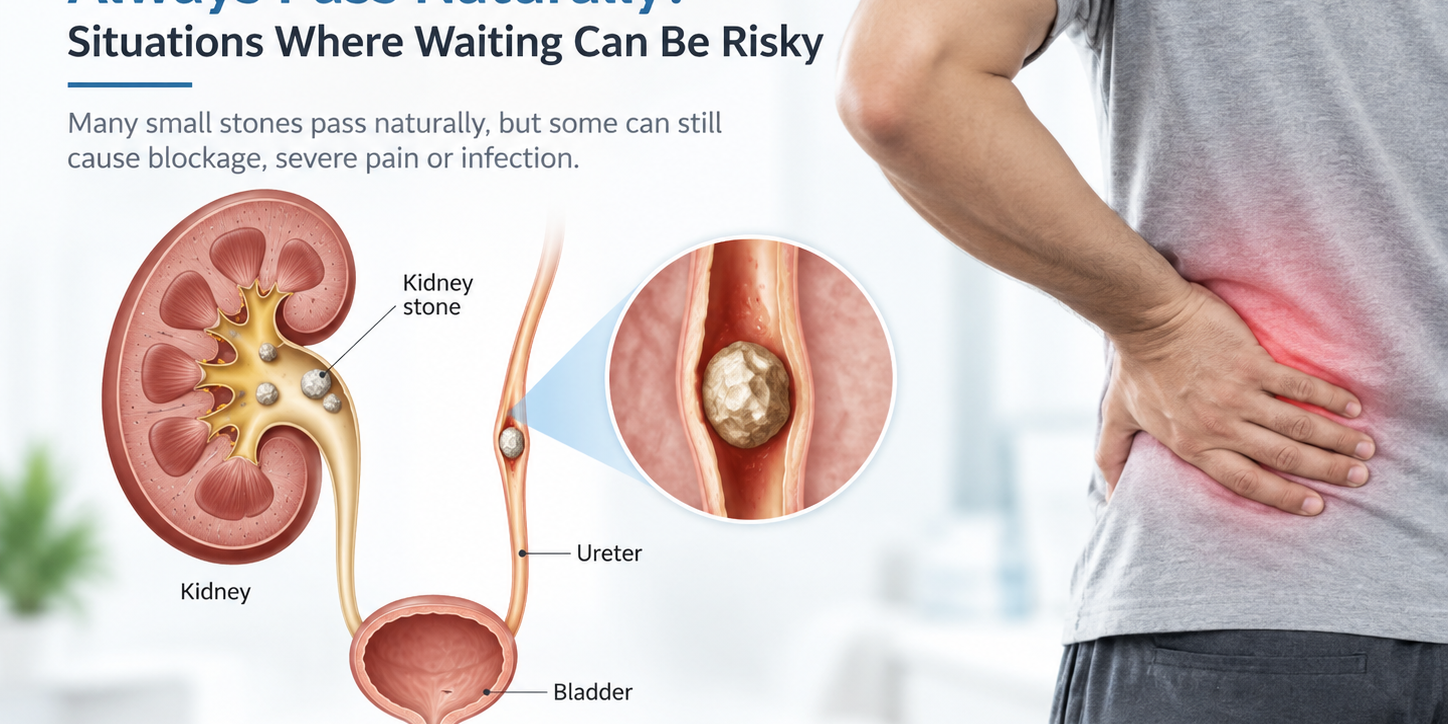
When to Consider Kidney Stone Treatment
Being told that you have a small kidney stone may sound reassuring. Many small stones do pass through the urinary tract naturally, but size is only one part of the decision.
A small stone can still become stuck in the ureter, obstruct urine flow, trigger severe pain or contribute to infection. Its location, associated symptoms, kidney function and progress on follow-up imaging are equally important.
The National Institute of Diabetes and Digestive and Kidney Diseases states that small stones may pass without a procedure. However, stones causing obstruction, severe pain or other complications may require urgent treatment.
Therefore, choosing kidney stone treatment in Pune should be based on a proper urological evaluation rather than stone size alone.
What Determines Whether a Small Kidney Stone Will Pass?
Kidney stones form inside the kidney, but symptoms often begin when a stone enters the ureter, the narrow tube that carries urine to the bladder.
Smaller stones generally have a better chance of passing than larger ones. Nevertheless, natural passage depends on several factors:
- Stone size and shape: A very small, smooth stone may travel more easily. An irregularly shaped stone can become lodged despite its small size.
- Stone location: A stone closer to the bladder generally has a better chance of passing than one located higher in the ureter.
- Ureteral anatomy: Narrowing, swelling or previous surgery can interfere with passage.
- Symptoms and complications: Infection, persistent vomiting, uncontrolled pain or impaired kidney function may make waiting unsafe.
- Progress over time: A stone that remains in the same position on repeated imaging may require active treatment.
The European Association of Urology guidelines recommend observation only when active removal is not indicated and the patient does not develop complications.
When Can Waiting Be Reasonable?
A urologist may recommend a monitored trial of natural passage when the stone is considered likely to pass and there are no warning signs. This approach may include pain relief, appropriate fluid intake, prescribed medication in selected cases and planned follow-up.
Waiting does not mean ignoring the stone. Follow-up is necessary because symptoms alone do not always confirm whether a stone has passed. Pain may temporarily improve even if the stone remains in the ureter.
Straining the urine may help capture the stone for analysis. Stone analysis can identify its composition and support a personalised prevention plan.
When Can a Small Stone Become Dangerous?
Urinary Obstruction
A stone can block the ureter and cause urine to collect above the obstruction. This condition is called hydronephrosis. If obstruction persists, pressure within the urinary system may affect kidney function.
Some people experience severe colicky pain, while others have milder or intermittent symptoms. The intensity of pain does not always indicate the degree of obstruction.
Infection Behind an Obstructing Stone
A urinary infection combined with obstruction is a medical emergency. The infected urine may be unable to drain normally, increasing the risk of a serious systemic infection.
Urgent drainage with a ureteric stent or nephrostomy may be required before definitive stone removal. Antibiotics alone may not be sufficient when infected urine remains trapped.
Persistent Pain or Vomiting
Repeated severe pain can interfere with sleep, eating and normal activities. Vomiting may lead to dehydration and make oral medicines difficult to tolerate. According to the NIDDK, hospital treatment may be necessary when vomiting causes dehydration.
Reduced Kidney Function
Waiting may be inappropriate when kidney function is already reduced, both kidneys are affected or the person has only one functioning kidney. These situations require timely assessment by a urologist.
Warning Signs That Need Prompt Medical Attention
Seek urgent medical care if a suspected or diagnosed kidney stone is accompanied by:
- Fever, chills or shivering
- Inability to pass urine or a marked reduction in urine output
- Severe pain that does not improve with prescribed medicine
- Persistent vomiting or inability to drink fluids
- Weakness, confusion, dizziness or rapid breathing
- Pain in someone with one functioning kidney, pregnancy or known kidney disease
These symptoms do not prove that a dangerous complication is present, but they should not be managed through home remedies alone.
How Is the Stone Evaluated?
A urologist may assess the location and effect of a stone using ultrasound, X-ray or a non-contrast CT scan. Urine testing can identify blood or infection, while blood tests may assess kidney function and signs of inflammation.
The choice of imaging depends on the clinical situation, previous reports and whether radiation exposure needs to be limited.
Follow-up imaging may be recommended to confirm that the stone has passed and that the kidney is draining properly.
When May Active Kidney Stone Treatment Be Needed?
Treatment may be considered when a stone is unlikely to pass, remains obstructive, causes recurrent pain, is associated with infection or threatens kidney function.
Options may include:
- Shock wave lithotripsy: Sound waves are used to break a suitable stone into smaller fragments.
- Ureteroscopy: A thin instrument is passed through the urinary tract to reach and remove or fragment the stone.
- Temporary drainage: A ureteric stent or nephrostomy may be used when urgent drainage is required.
The most suitable method depends on stone size, location, density, anatomy and the patient’s health. Not every small stone needs surgery, and not every small stone is safe to observe.
Preventing Another Kidney Stone
After the immediate problem is managed, prevention becomes important. General advice may include adequate water intake, moderating salt and following a balanced diet. However, dietary changes should be based on the stone type and individual health needs.
People with recurrent stones may require blood tests, stone analysis or a 24-hour urine assessment. Avoid making extreme dietary restrictions without professional guidance.
Consult Dr. Pawan Rahangdale at Urovision Urology Care Clinic
At Urovision Urology Care Clinic, Dr. Pawan Rahangdale evaluates kidney stones according to their size, location, symptoms and effect on kidney drainage.
If you are looking for kidney stone treatment in Pune, you can consult Dr. Pawan Rahangdale for an individual assessment. The aim is to determine whether monitored passage is appropriate or whether timely intervention may help prevent complications.
This article is for general education and does not replace personalised medical advice or emergency care.
Frequently Asked Questions
1. How long does a small kidney stone take to pass?
The time varies considerably. Some stones pass within days, while others may take several weeks or fail to pass. Size, shape and location influence the likelihood of natural passage. A urologist may recommend follow-up imaging rather than relying only on pain relief.
2. Can a 4 mm or 5 mm kidney stone require surgery?
Yes. Although stones in this size range may pass naturally, treatment may still be required if the stone causes obstruction, infection, persistent pain, vomiting or reduced kidney function. The decision should be based on the full clinical picture.
3. Can a kidney stone cause damage without severe pain?
Yes. Pain can decrease even when a stone remains in place. Persistent obstruction may affect kidney drainage without continuous severe pain. This is why scheduled follow-up is important during conservative management.
#kidneystone #kidneystonetreatment #kidneystonetreatmentinpune #urologistinpune #ureteroscopy #kidneyhealth #urinaryhealth #punehealthcare