
Recovery Guidance for Kidney Stone Treatment in Pune
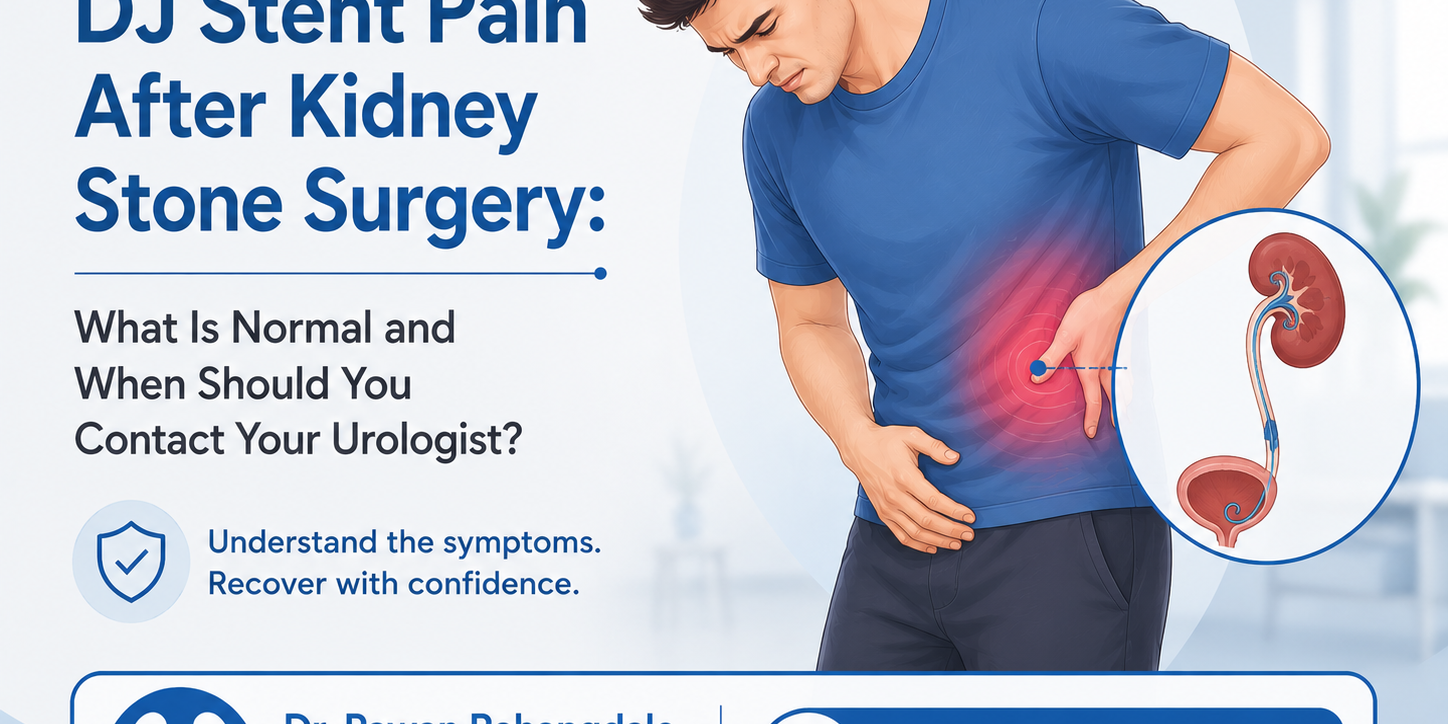
A double-J stent, commonly called a DJ stent, is often placed after kidney stone surgery. It is a thin, flexible tube extending from the kidney to the bladder. The curved ends help keep it in position.
A DJ stent keeps urine flowing while the ureter recovers from swelling, instrumentation or stone removal. Although it serves an important purpose, it can cause discomfort. Patients may experience bladder irritation, urinary urgency, blood in the urine or pain in the side during urination.
Knowing which symptoms are expected and which require medical attention can make recovery safer and less stressful.
Why Is a DJ Stent Placed?
A urologist may place a DJ stent after ureteroscopy or laser stone surgery to:
- Maintain urine drainage from the kidney
- Bypass temporary swelling or obstruction
- Help an injured or inflamed ureter heal
- Support the passage of small stone fragments
- Reduce the risk of blockage after treatment
Not every kidney stone procedure requires a stent. The decision depends on stone size, location, ureteric swelling, infection risk and what happened during surgery.
What Symptoms Are Usually Normal?
The lower end of the stent sits inside the bladder and can irritate the bladder lining. Urine may also move around the stent towards the kidney during urination, producing temporary side pain.
Common stent-related symptoms include:
- Increased urinary frequency and urgency
- Burning or stinging while passing urine
- Mild lower abdominal or bladder discomfort
- Side or kidney pain, especially during or just after urination
- Pink or lightly blood-stained urine
- A feeling that the bladder has not emptied completely
- Increased discomfort after walking or physical activity
An NHS patient guide on ureteric stents notes that frequency, urgency, blood in urine and bladder or kidney discomfort are commonly reported. These symptoms often improve after stent removal.
Why Can Blood Appear in the Urine?
The stent can rub against the urinary lining, especially during activity. Light haematuria that comes and goes can occur while the stent remains in place.
Resting and maintaining appropriate fluid intake may help when bleeding follows physical activity. However, heavy bleeding, repeated large clots or inability to pass urine is not considered routine and requires medical advice.
Patients taking blood-thinning medication should follow the surgeon’s instructions. They should not stop prescribed medicines independently.
When Should You Contact Your Urologist?
Seek prompt medical advice for:
- Fever, chills or feeling significantly unwell
- Severe pain that does not improve with prescribed medicine
- Persistent vomiting or inability to drink fluids
- Difficulty passing urine or complete urinary blockage
- Large blood clots or worsening heavy bleeding
- Foul-smelling or very cloudy urine with increasing burning
- A visible stent coming out or suspected displacement
- New continuous urinary leakage
Fever with a urinary stent may indicate infection and should be assessed promptly. A blocked, infected urinary system can become serious if treatment is delayed.
How Can DJ Stent Discomfort Be Managed?
Take pain-relieving and stent-related medicines exactly as prescribed. Depending on the patient, a urologist may prescribe an alpha-blocker, bladder-relaxing medicine or another suitable medication.
Drink enough water unless you have been advised to restrict fluids because of a heart, kidney or other medical condition. Extreme overhydration is unnecessary and may worsen frequency or discomfort.
Gentle daily activity is generally possible, but strenuous exercise may increase pain or haematuria. Some patients may need temporary adjustments to physically demanding work.
Warm compresses may help mild side or lower abdominal discomfort. Contact your surgeon before adding over-the-counter medicines because some may be unsuitable for patients with kidney problems, bleeding risk or other conditions.
Can a DJ Stent Be Left Inside Indefinitely?
Most stents placed after kidney stone surgery are temporary. The exact duration varies from a few days to several weeks depending on the procedure and healing.
A forgotten stent can develop mineral deposits, become difficult to remove, cause infection or contribute to new stone formation. Before leaving the hospital, confirm:
- Whether the stent has a removal string
- The scheduled removal date
- Where removal will take place
- Which symptoms require an urgent call
Do not pull a stent string unless your urologist has specifically instructed you to remove it in that manner and on a particular date.
What Happens After Stent Removal?
Stent removal is usually brief. Depending on the type, it may be removed by a string or through a small camera called a cystoscope.
Mild burning, frequency, pink urine or cramping may continue for 24 to 48 hours afterward. Increasing pain, fever, inability to urinate or persistent heavy bleeding after removal needs evaluation.
Some patients require follow-up imaging to confirm that the kidney is draining well and that no important stone fragments remain.
Does Stent Pain Mean the Surgery Failed?
No. Stent discomfort usually comes from bladder irritation or urine reflux rather than unsuccessful stone removal.
Persistent symptoms after removal may need investigation for residual fragments, urinary infection, ureteric swelling or another cause. The urologist may recommend urinalysis, urine culture, ultrasound or other imaging based on the symptoms.
Kidney Stone Treatment in Pune at Urovision Urology Care Clinic
Dr. Pawan Rahangdale provides surgical care, stent management and postoperative follow-up at Urovision Urology Care Clinic. Patients receiving kidney stone treatment in Pune can receive clear instructions regarding expected stent symptoms, medicines, activity and the planned removal date.
Contact the clinic if pain becomes severe, fever develops or you are unsure whether a symptom is part of normal recovery.
Frequently Asked Questions
1. Is kidney pain during urination normal with a DJ stent?
Mild or brief side pain during urination can occur because urine may reflux towards the kidney around the stent. Severe, persistent pain or pain associated with fever requires medical evaluation.
2. How long does DJ stent pain last?
Symptoms may continue while the stent remains in place, although they often become more manageable over time. Most stent-related discomfort improves after removal.
3. Is blood in urine normal after kidney stone surgery?
Light pink urine or intermittent mild bleeding can occur after surgery and with a stent. Heavy bleeding, large clots or inability to pass urine requires prompt contact with a urologist.
#djstent #kidneystonesurgery #kidneystonetreatmentinpune #ureteroscopy #kidneystonecare #urology #urovision